Diabetes and the Disability Tax Credit
Type 1 qualifies automatically from the 2021 tax year. Type 2 on insulin can qualify on the 14-hour test. What counts, and how far back it goes.
Checked against official sources on September 28, 2026.
On this page

People with type 1 diabetes qualify for the Disability Tax Credit automatically, from the 2021 tax year on. People with type 2 diabetes, or other conditions treated with insulin, can qualify too if the therapy takes at least 14 hours a week of dedicated time. This page explains both routes, what time counts, and how far back the credit can go.
Type 1
Qualifies automatically
Deemed to meet the life-sustaining therapy test, from the 2021 tax year
14 hours
A week, on average
The test for type 2 and other therapies
2 times
A week, at least
How often the therapy must be needed
$1,448
Federal credit a year, 2026
Plus a provincial credit; $2,292 for a child under 18
Type 1 diabetes: deemed eligible
CRA’s guide says it plainly: individuals diagnosed with type 1 diabetes are deemed to meet the life-sustaining therapy criteria. The practitioner no longer has to list activities or count hours. You still have to apply on Form T2201, a medical doctor or nurse practitioner still certifies it, and CRA still has to approve it.
The deeming rule applies from the 2021 tax year. For 2020 and earlier, CRA can still adjust past returns, but only for years in which the old 14-hour test was actually met. Ask your practitioner to give the date the therapy began.
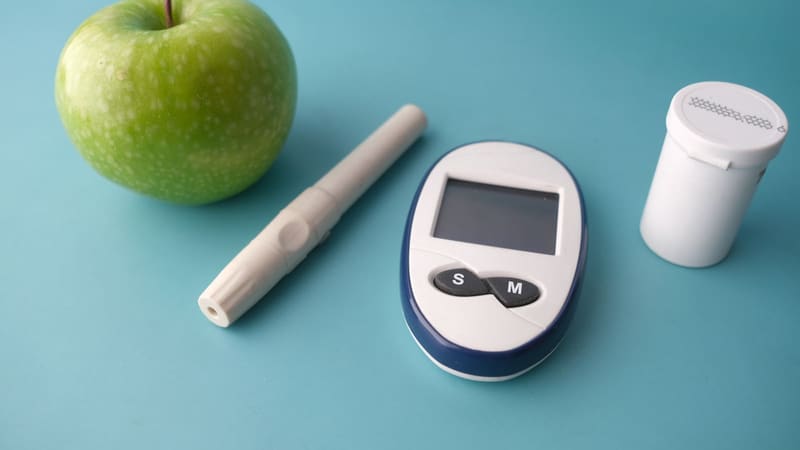
Type 2 and other insulin therapy: the 14-hour test
The life-sustaining therapy test
Type 1 diabetes is deemed to meet all three. Anyone else counts the time.
Supports a vital function
insulin therapy does
2× a week
at least
14 hours a week
on average, of dedicated time
Life-sustaining therapy
Only time taken away from normal activities to do the therapy counts. Following a diet or exercise plan, travel and medical appointments don’t.
When the medication dose has to be worked out and adjusted every day, CRA counts the time spent on activities directly tied to dosing and giving it. Its own examples: checking blood glucose, preparing and giving insulin, calibrating equipment, testing ketones, keeping a logbook of blood glucose levels, and counting carbohydrates to work out the insulin dose. Setting up a portable device counts too.
Keep a log for two or three typical weeks before seeing your practitioner. A medical doctor or nurse practitioner certifies life-sustaining therapy.
Children with diabetes
For a child under 18 the federal credit includes a supplement of up to $6,032 for 2026, about $2,292 a year federally in total, and approval opens the Child Disability Benefit and an RDSP. A parent or supporting relative can claim it. Estimate the credit and past years.
Approval also opens the Canada Disability Benefit from age 18, and diabetes devices and supplies on CRA’s list, such as glucose monitors and insulin pumps, can go on the medical expense credit.
Questions people ask
Does type 1 diabetes qualify for the Disability Tax Credit?
Yes. People diagnosed with type 1 diabetes are deemed to meet the life-sustaining therapy criteria, from the 2021 tax year. You still apply on Form T2201 and need CRA’s approval.
Can type 2 diabetes qualify?
Yes, if insulin or other therapy is needed at least twice a week and takes an average of at least 14 hours a week of dedicated time, counting things like glucose checks, carb counting and dosing.
How far back can a type 1 claim go?
The automatic rule covers 2021 onward. Earlier years can be adjusted only if the 14-hour test was met in those years.
Can I claim diabetes supplies as medical expenses too?
Many can. Devices and supplies on CRA’s medical expense list, such as glucose monitors and insulin pumps, are claimed separately from the Disability Tax Credit. Check CRA’s list for each item.
Sources
Checked against these on September 28, 2026. Amounts change every January or July; we recheck them each year.
- CRA Guide RC4064, Disability-Related Information for the mental functions list, life-sustaining therapy and who can certify
- CRA: DTC statistics 2015 to 2024, Table 8 for accepted certificates by category
- CRA: Indexation adjustment for personal income tax and benefit amounts for the $10,341 disability amount and $6,032 child supplement (2026)
- Plan Institute: changes to Disability Tax Credit eligibility take effect for type 1 diabetes deemed eligible from 2021
Free tools
- Tax credit
Disability Tax Credit checker
Go through the categories on Form T2201 in plain words and see which route fits.
- Tax credit
Tax credit refund estimator
What the credit could be worth this year and for up to 10 past years.
- Monthly benefit
Canada Disability Benefit estimator
The income test, done for you. Up to $204.20 a month from July 2026.
- CPP
CPP Disability calculator
Check the contribution rule, estimate the monthly amount and see how much back pay is at stake.
- Savings
RDSP grant and bond estimator
How much the government adds to a disability savings plan at your income.
- Tax credit
Medical expense credit calculator
Your 3% threshold, what you can claim, and which partner should claim it.
- Tax credit
Caregiver credit calculator
The Canada caregiver amount for an adult relative or a child, with the income test done.
- Tax credit
Home accessibility credit calculator
What a ramp, a walk-in shower or a stair lift is worth back, up to $2,800 a year.
- Deadlines
Appeal deadline tracker
Turned down? Find the last day to object, ask for reconsideration or appeal.